The Confirming Compassion of Christ
Matthew 15:32-16:12 Outline
Jesus is the CHRIST!
His compassion is expressed.
His coming is evident.
His kingdom is exclusive
The COMPASSION of Christ is EXPRESSED (15:32-39)
The COMING of Christ is EVIDENT (16:1-4)
The KINGDOM of Christ is EXCLUSIVE (16:5-12)
Matthew 15:32-16:12 Commentary
Jesus went away from there and withdrew to the district of Tyre and Sidon....Canaanite woman from that region came out and was crying ... “Have mercy on me, O Lord, Son of David ...my daughter is severely oppressed by a demon...
He answered “I was sent only to the lost sheep of the house of Israel.”
Matthew chapters 14–15 are part of a larger unit of Matthew’s thought. We should consider Jesus’ rejection at Nazareth (13:53–58) as the beginning of this unit. The religious leaders’ second request for a sign (16:1–4) and Jesus’ warning to the disciples concerning the Pharisees and Sadducees (16:5–12) definitely belong to this unit as well. Peter’s confession of Jesus and Jesus’ announcement of his church (16:13–20) serve to break through into the remainder of the book.1
Setting – GENTILE AREA - Jesus has been in Galilee for 1 1⁄2 years at least, northern part of Palestine...among Jewish People. ...there is a mounting resistance/rejection.
Which is why in vs. 21 Jesus departed for Tyre and Sidon. (Left Galilee)...left Palestine for Lebanon – He was seeking seclusion...but met with Gentile Woman. (contrast to Jews.)
Modern Lebanon....then went east to Decapolis.
This is prophetic Picture of Kingdom.....Israel = a means to a greater end...the world.
This summary is a contrasting parallel to the earlier summary of Jesus’ healing ministry among the Jews (14:34–36). Matthew wanted his readers to know that the Lord accepted and loved the Gentiles as much as the Jews and that the Gentiles were responding with at least as much faith as the faithful remnant of the Jews. In fact, contrasting the centurion and the Canaanite woman with the religious leaders, Matthew tells us that some Gentiles responded with even greater faith than most of the Jews.2
Matthew 15:29-31 = Mark 7:31-37
Mark 7:31 - 31 Then he returned from the region of Tyre and went through Sidon to the Sea of Galilee, in the region of the Decapolis.
THIS WAS ABOUT CHRIST saying that he will do for the Gentiles what he did for Israel.
Similar to Acts 10....
29 Jesus went on from there and walked beside the Sea of Galilee. And he went up on the mountain and sat down there…
Matthew 4:18 While walking by the Sea of Galilee, he saw two brothers, Simon (who is called Peter) and Andrew his brother, casting a net into the sea, for they were fishermen
Matthew 5:1 - Seeing the crowds, he went up on the mountain, and when he sat down, his disciples came to him.
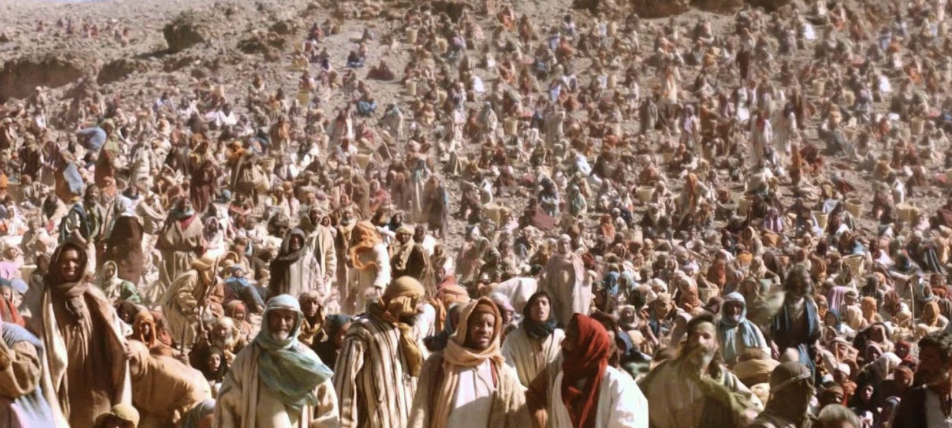
30 And great crowds came to him, bringing with them the lame, the blind, the crippled, the mute, and many others, and they put them at his feet, and he healed them,
Matthew 11:4-6 4 And Jesus answered them, “Go and tell John what you hear and see: 5 the blind receive their sight and the lame walk, lepers are cleansed and the deaf hear, and the dead are raised up, and the poor have good news preached to them. 6 And blessed is the one who is not offended by me.”
Mark 7:31 31 Then he returned from the region of Tyre and went through Sidon to the Sea of Galilee, in the region of the Decapolis
Decapolis is on the southeast edge of the Sea of Galilee. It’s not far from the area known as Gadara where Jesus, you remember, delivered two demoniacs and sent the demons into the herd of swine? It’s the southern end of the modern Golan Heights.
Decapolis means ten cities, deka is ten, polis is city. There were ten little cities there, small ones. They were wedged in between two territories, really, under Jewish domination. One controlled by Philip the tetrarch and the other controlled by Herod Antipas, and in the middle was this wedge called Decapolis. And these ten cities were each free Greek cities. The Greeks were big into free city states, and these, each of them, were free, and they were under sort of an overall sovereignty by the governor of Syria. They were not under the rule of Israel or any of its monarchs. And so they were Greeks or gentiles sort of wedged in the middle of that Jewish part of the world.
Archeologists who have searched the area have found statues and monuments to Zeus and Athene and Artemis and Hercules and Dionysius and Demeter and many other Greek gods, so they were into Greek paganism full-blown, and Jesus came there.
PUT THEM AT HIS FEET - The verb there is to fling in haste
Not orderly.
31 so that the crowd wondered, when they saw the mute speaking, the crippled healthy, the lame walked, and the blind seeing. And they glorified the God of Israel.
Matthew 9:32-34 32 As they were going away, behold, a demon-oppressed man who was mute was brought to him. 33 And when the demon had been cast out, the mute man spoke. And the crowds marveled, saying, “Never was anything like this seen in Israel.” 34 But the Pharisees said, “He casts out demons by the prince of demons.”
Matthew 9:8 8 When the crowds saw it, they were afraid, and they glorified God, who had given such authority to men.
Isaiah 9:23 23 For when he sees his children, the work of my hands, in his midst, they will sanctify my name; they will
sanctify the Holy One of Jacob and will stand in awe of the God of Israel.
Matthew apparently intends us to see Jesus as still in Gentile territory here.3
WONDERED - thaumazō - marveled. I mean they were struck with absolute awe at this scene
Mark 7:37 - 37 And they were astonished beyond measure, saying, “He has done all things well. He even makes the deaf hear and the mute speak.” 4
THE GOD OF ISRAEL – These were Gentiles – This was not their God....in 9:8 Jews marveled and glorified God....But here...it is the God of Israel.
GLORIFYING GOD – a combination of fear and praise.
the thing that so wonderfully qualifies the ministry of Christ in Decapolis and in the area of the gentiles was they glorified the God of Israel. Praise is that for which all ministry seeks.... we don’t minister to people - mark this - just to meet their need, but so that they, in having their need met, can do what? Glorify God. So that everything is to redound to the praise and the glory of God. That is the goal of all ministry
2 Corinthians 4:15
John 4:23
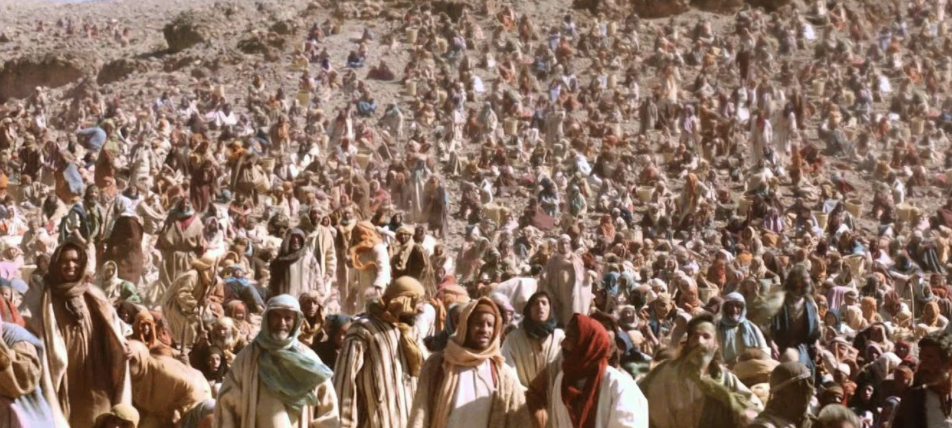
32 Then Jesus called his disciples to him and said, “I have compassion on the crowd because they have been with me now three days and have nothing to eat. And I am unwilling to send them away hungry, lest they faint on the way.”
Mark 8 – Jesus feeds 4000
Matthew 9:32 -
Matthew 14:14 -
Matthew 15:32 -
I HAVE COMPASSION ON THE CROWD – seems to be emphasis of this section.
COMPASSION - A feeling of deep sympathy and sorrow accompanied by a strong desire to alleviate the pain and remove its cause. For the Latins, it meant to suffer with, but in English, it has come to mean not only to suffer with someone or to feel their pain and their hurt but to have a strong desire to see its cause permanently eliminated.
COMPASSION - The Greek term itself is a most interesting term. It’s basically a verb form added to a word that means bowels or visceral area or guts, stomach, and it means that Jesus actually felt physical pain in His stomach over the needs of people with which He identified and for whom He desired deliverance.
Lam 3:23-34
This passage is a contrasting parallel to the feeding of the five thousand Jews (14:13–21), further illustrating God’s
acceptance of the Gentiles. In addition to the geography, a clue to the different constituencies of the two audiences (one Jew, one Gentile) is found in the use of two different Greek words for “basket” used in the two passages. The term in Matthew 14 is the word commonly used among the Jews. The term used in Matthew 15 is the word used in the Gentile community.5
Matthew 9:36 - 36 When he saw the crowds, he had compassion for them, because they were harassed and helpless, like sheep without a shepherd.
Jesus’ compassion reminds us of 14:14, but now it applies to the crowd’s physical as well as spiritual hunger. They have remained with him not merely for the better part of one day but for three. Whatever food supplies may have fed the crowd at first have now been exhausted. Jesus’ charisma has kept the crowds from leaving despite their hunger.6
The crowd was the same Gentile people who had been with Jesus on the mountainside near the Decapolis throughout three days of teaching and healing ministry (15:29–31). Jesus expressed privately to his disciples his compassion for the people’s hunger. “They are patiently waiting with me” is the force of the Greek. The Greek verb used here means “to remain a long time”7
FAINT – collapse....
He showed compassion ...not just for sick/ill...but also hungry.
33 And the disciples said to him, “Where are we to get enough bread in such a desolate place to feed so great a crowd?”
The disciples...are thick headed.....and these were Gentiles.
DESOLATE PLACE – wilderness area.
The solution to their problem is obviously for Jesus to do what he did before and work a miracle. But the emphatic “we” (a
uniquely Matthean touch), corresponding to the emphatic “you” of 14:16, may explain matters. Previously, Jesus had told his
disciples to solve the problem themselves. They couldn’t, so he did.8
We might wonder how the disciples could have forgotten the feeding of the five thousand (14:13–21). Perhaps they assumed
that such a miracle could only be done among the Jews, since the symbolism of the messianic banquet applied only to Israel.
Or, more likely, they truly did not understand the teaching purpose of the feedings (see 16:5–12).9
We got nothing....Lord, how are we going to feed them?
34 And Jesus said to them, “How many loaves do you have?” They said, “Seven, and a few small fish.”
Luke 6:38 – Give and it shall be given unto you.
35 And directing the crowd to sit down on the ground,
On the ground (ἐπὶ τὴν γῆν). Compare Mark 8:6. On the occasion of feeding the five thousand, the multitude sat down on the grass (ἐπὶ τοὺς χόρτους), Matt. 14:19. It was then the month of flowers. Compare Mark 6:39, the green grass, and John 6:10, much grass. On the present occasion, several weeks later, the grass would be burnt up, so that they would sit on the ground.10
He did not tell them to sit down on grass...like he did in feeding of 5K....time has passed, it is late summer now.
36 he took the seven loaves and the fish, and having given thanks he broke them and gave them to the disciples, and the disciples gave them to the crowds.
tn Grk “was giving them to the disciples, and the disciples to the crowd.”11
in the Greek, “He kept on giving to the disciples” - “and the disciples to the multitude.”
David said the Righteous never go begging for bread.
Jesus said...if he feeds the grass/birds...he will feed you.
Pray...give us this day our daily bread.
The Lord did not need them....but used them.
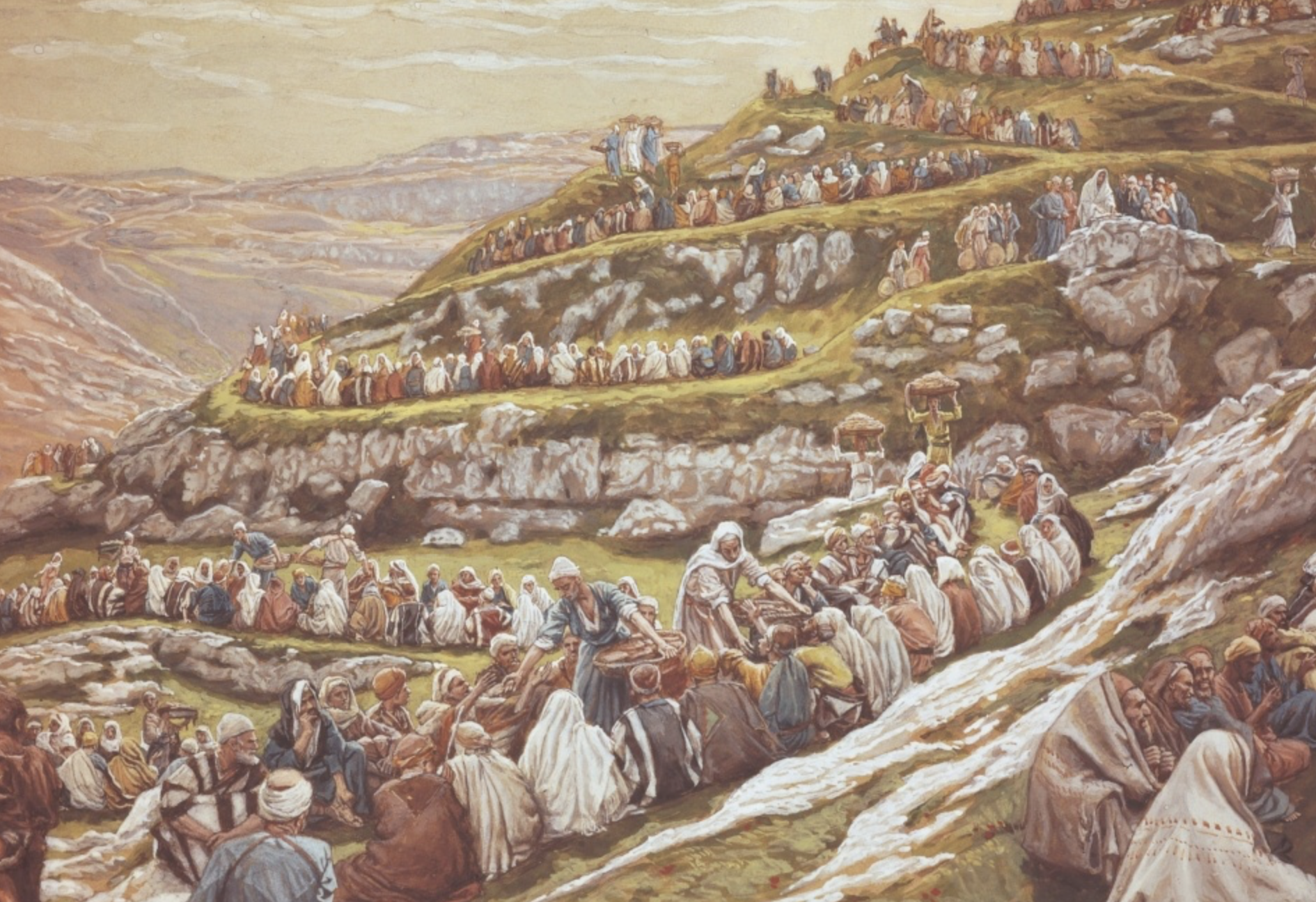
37 And they all ate and were satisfied. And they took up seven baskets full of the broken pieces left over.
God gives in abundance.
And the word for “basketfuls” in v. 37 is spyris, a more Hellenistic term than the kophinos of 14:20. So it is better to see Jesus as deliberately repeating for Gentiles what he previously offered to Jews.12
The word in chapter 14, verse 20, is kophinos. That’s a little basket. - a Jewish basket. It normally was a little round thing - had a little sort of a spout on one end you could stick things in.
Spuris and that is a gentile basket. It’s a hamper. It’s a big basket, and the interesting thing is that every time the New Testament talks about the feeding of the 5,000, whatever gospel account it’s in, it always uses kophinos. And every time it refers to the 4,000, it always uses spuris. - Acts 9 tells us it was the same basket, spuris, with which the apostle Paul was lowered over the wall in Damascus. It was big enough to put a whole person in. So it’s a big basket.
The baskets (v. 37) refer to a larger container than was previously used, and the specific word is more appropriate for Gentiles13
Gave thanks. According to the Jewish ordinance, the head of the house was to speak the blessing only if he himself shared in the meal; yet if they who sat down to it were not merely guests, but his children or his household, then he might speak it, even if he himself did not partake.14
small hand-baskets, specially provided for the Jews to carry levitically clean food while travelling in Samaria or other heathen districts. The word for basket used in relating the feeding of the four thousand (Matt. 15:37) is σπυρίς, a large provision-basket or hamper, of the kind used for letting Paul down over the wall at Damascus (Acts 9:25). In Matt. 16:9, 10, Christ, in alluding to the two miracles, observes the distinctive term in each narrative; using κοφίνους in the case of the five thousand, and σπυρίδας in the other.15
38 Those who ate were four thousand men, besides women and children.
tn Grk “And those eating were four thousand men, apart from children and
women.”16
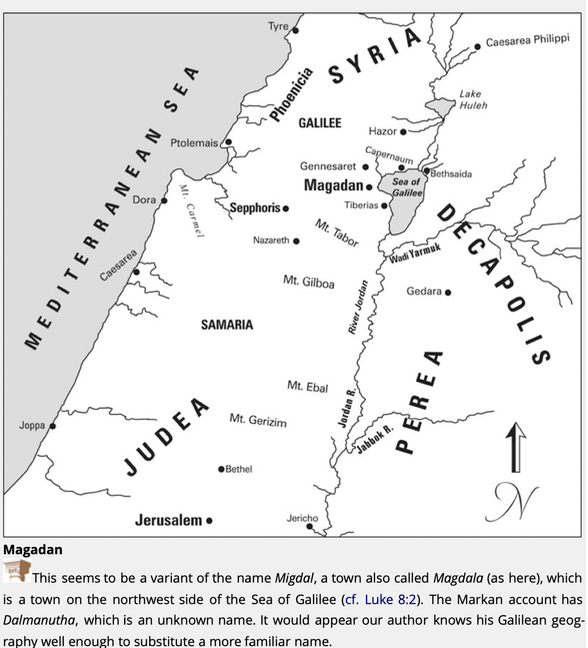
39 And after sending away the crowds, he got into the boat and went to the region of Magadan.
Back in Jewish territory.
sn Magadan was a place along the Sea of Galilee, the exact location of
which is uncertain.17
Seven may be the number of completeness or universal influence. Jesus thus offers to the whole world exactly what he first offered to Israel. Many respond positively even as the Jews are increasingly rejecting the gospel (recall v. 31b).18
Finally, Jesus returns to Israel (v. 39). Mark’s “Dalmanutha” is otherwise unknown (Mark 8:10) but probably, like Matthew’s “Magadan,” is an alternate name for Magdala. Magdala may be the same as Migdal Nunya (fish tower), a suburb of Tiberias on the west bank of Galilee.19
the vicinity of Magadan. Its location is uncertain, but Magadan may have been a variation on “Magdala,” the home of Mary Magdalene on the west shore of the sea. Wherever this region was, it was almost certainly in Jewish territory. Awaiting Jesus there were the Pharisees and Sadducees (16:1), spoiling for the next battle. What a refreshing vacation from hypocrisy Jesus’ Gentile detour must have been.20
16:1 And the Pharisees and Sadducees came, and to test him they asked him to show them a sign from heaven.
Pharisees were members of one of the most important and influential religious and political parties of Judaism in the time of Jesus. There were more Pharisees than Sadducees (according to Josephus, Ant. 17.2.4 [17.42] there were more than 6,000 Pharisees at about this time). Pharisees differed with Sadducees on certain doctrines and patterns of behavior. The Pharisees were strict and zealous adherents to the laws of the OT and to numerous additional traditions such as angels and bodily resurrection.21
Fundamentalists. Believed in a literal interpretation of the law. Believed in traditions, all of the Talmud. Common People. Hasidic Jews.
The Sadducees controlled the official political structures of Judaism at this time, being the majority members of the Sanhedrin. They were known as extremely strict on law and order issues.22
Did not believe in the resurrection. Did not believe in angels. Did not believe in the Spirit. Did not believe in immortality. Theological Liberals. Aristocrats. The High Priest was a Sadducee. Ran Temple Concessions. Political. Mingled more with Gentile culture.
sn What exactly this sign would have been, given what Jesus was already doing, is not clear. But here is where the fence- sitters reside, refusing to commit to him.23
As in 3:7 only Matthew mentions the Sadducees, no doubt to underline the hostility implied by this combination of groups, which were otherwise at odds.24
Upon returning to Jewish territory, Jesus was immediately confronted by the Jewish leaders and their deliberate disbelief (16:1–4). After this he issued a stern warning to his confused disciples concerning the danger of the hypocrites (16:5–12).25
The Pharisees and Sadducees (οἱ Φαρισαιοι και Σαδδουκαιοι [hoi Pharisaioi kai Saddoukaioi]). The first time that we have this combination of the two parties who disliked each other exceedingly. Hate makes strange bedfellows. They hated Jesus more than they did each other. Their hostility has not decreased during the absence of Jesus, but rather increased.26
2 He answered them, “When it is evening, you say, ‘It will be fair weather for the sky is read.’
3 And in the morning, “It will be stormy today, for the sky is red and threatening.’ You know how to interpret the appearance of the sky but you cannot interpret the signs of the times.
If the Jewish leaders can recognize what the weather is likely to be by the appearance of the sky, why can they not recognize the dawning of the kingdom of heaven and the messianic age by what Jesus does and teaches? Jesus has already provided plenty of signs to this end.27
Jesus’ answer is very simple. People understand the significance of things every day: a red sky at night is the sign of good weather to come; a red sky in the morning is the sign of bad weather. How is it possible, Jesus asks, for people to read the skies but not the signs of the times?28
The would not see....by God’s grace we can see.
John 1:5
1 Cor. 14:2
Eph 4:17
Psalm 82:5
Luke 19:42
Willful/sinful blindness and satanic blindness becomes sovereign blindness.
Basically, they say that if the sky is red at night, it’s going to be a beautiful day the next day. If the sky’s red in the morning,
it’s going to be a stormy day. And He says to these guys, He says, “Hey, you’re good at telling the weather. I mean you got the little deals down. You know what the common feeling is red sky at night, so forth. You’ve got that down. You’re real good with the physical perceptions. You can see the sign, the clouds and the red sky, and you can say so and so about the weather, but you hypocrites, you can discern the face of the sky, but you cannot discern the signs of the times.”... And what He is saying to them is simply this: Your sensitivity to weather makes a mockery out of your insensitivity to God’s Kingdom because you are not meteorologists. You pass yourself off as theologians and, frankly, you’re better at the weather than you are at theology. What an indictment - ooh. This illustration was also used by our Lord in another context or a similar one in Luke 12. Very vivid. They were experts in the physical realm. “You can look at the sky and so - but you don’t have a clue what’s going on in God’s Kingdom.” They could see physical signs but not Spirit.
Mark 8:12
4 An evil and adulterous generation seeks for a sign, but no sign will be given to it except the sign of Jonah.” So he left them and departed.
Matthew 12:39-40 but he answered them, “An evil and adulterous generation seeks for a sign, but no sign will be given to it except the sign of the prophet Jonah. 40 For just as Jonah was three days and three nights in the belly of the great fish, so will the Son of Man be three days and three nights in the heart of the earth.
Jesus’ answer is very simple. People understand the significance of things every day: a red sky at night is the sign of good weather to come; a red sky in the morning is the sign of bad weather. How is it possible, Jesus asks, for people to read the skies but not the signs of the times?...Jesus accuses his opponents of spiritual adultery. Instead of being content with the signs God has already given, they want more. Jesus tells them that they ought to be satisfied with the sign of Jonah. Although the bare reference is enigmatic, we should probably link this back to 12:38–41, where the significance of Jonah—again in response to the Pharisees’ request for a sign—is more expansively given. Jonah was in the earth for three days and three nights; so Jesus will be ‘in the heart of the earth’ (12:40) for the same period....Jesus is telling them to read what is there in Scripture and is obvious. C. S. Lewis wrote a famous essay on ‘Fern Seed and Elephants’, in which he talked about people claiming to see the significance of the smallest things while not seeing the elephants in front of them. Jesus is saying that the Pharisees are like that—unwilling to accept the clearest revelation from God.29
The sign is the sign of Jonah, which is the resurrection. Jonah was a type or an example or a model or an illustration of Christ going into the grave and rising. The only sign you’re going to see is the resurrection. Only Jonah’s generation’s going to be better off than you are because Jonah’s generation repented, and you won’t, and they didn’t, did they?
5 When the disciples reached the other side, they had forgotten to bring any bread.
6 Jesus said to them, “Watch and beware of the leaven of the Pharisees and the Sadducees.”
Since the teaching of the Pharisees and Sadducees is grouped together, and since the two sects disagreed on so many specific points of law, their common “yeast” may be their more general rejection of God’s will for people to respond to Jesus with discipleship. Hyperconservatism and hyperliberalism in contemporary religion and politics also share the common features of dogmatism and judgmentalism and remain an insidious threat to the true church of Jesus Christ.30
7 And they began discussing it among themselves saying, “We brought no bread.”
Because they forgot to bring any, they think that Jesus must be warning them against buying food from these groups of Jewish leaders.31
8 But Jesus, aware of this, said, “O you of little faith, why are you discussing among yourselves the fact that you have no bread?
9 Do you not yet perceive? Do you not remember the five loaves for the five thousand, and how many baskets you gathered?
Matthew 15:16 - 16 And he said, “Are you also still without understanding?
10 Or the seven loaves for the four thousand, and how many baskets you gathered?
11 How is it that you fail to understand that I did not speak about bread? Beware of the leaven of the Pharisees and Sadducees.”
12 Then they understood that he did not tell them to beware of the leaven of bread, but of the teaching of the Pharisees and Sadducees.
Matthew 5:20 20 For I tell you, unless your righteousness exceeds that of the scribes and Pharisees, you will never enter the kingdom of heaven.
One might have expected Jesus to complain of their little intelligence instead; but if they really recognized him as the Bread of life, based on a mature faith and correct Christology, they would be thinking on a spiritual level concerning the yeast too. So he reminds them of his two feeding miracles, and especially of the superabundance of the leftovers, in order to make them think again on this metaphorical plane. Incidental support appears here as well for viewing those two miracles as distinct. Interestingly, the difference between the words for baskets is preserved in vv. 9–10, confirming our hunch that these terms were significant pointers to the one miracle as for Jews and the other for Gentiles (see comments under 14:13–21; 15:29–39). In v. 11 Jesus then repeats the warning of v. 6, and this time the disciples understand (v. 12a). As in chap. 13, only Matthew inserts these extra references to the disciples’ understanding. There may be an underlying Aramaic play on words in v. 12b, given the similarity between “teaching” (ʾamîrʾā) and “yeast” (hămîrʾa).32
The leaven he is talking about is not yeast for baking but ‘the teaching of the Pharisees and Sadducees’, which has the power to influence our lives and affect our behaviour. We need to make sure that the religion of the Pharisees does not become our religion.33
Alfred Edersheim, the great scholar - Jewish scholar - says the Lord ended each phase of His ministry with a feeding. He ended the ministry in Galilee with the feeding of the 5,000, He ended the ministry in the gentile area with the feeding of the 4,000, and He ended the Judean ministry before His death on the cross with the feeding of His own in the upper room, and the Lord always leaves people fed.
Continue Reading