Tradition and Truth
Matthew 15:1-20 Outline
TRADITIONS never ever TRUMP TRUTH! v1-6
FALSE TEACHERS (and those who follow them) will “FALL” v7-14
THE HEART of our problem is our HEART (not our HANDS)! v15-20
Matthew 15:1-20 Commentary
This is at the peak of Jesus’ popularity during his earthly ministry.
Parallel Passage – Mark 7:1-23
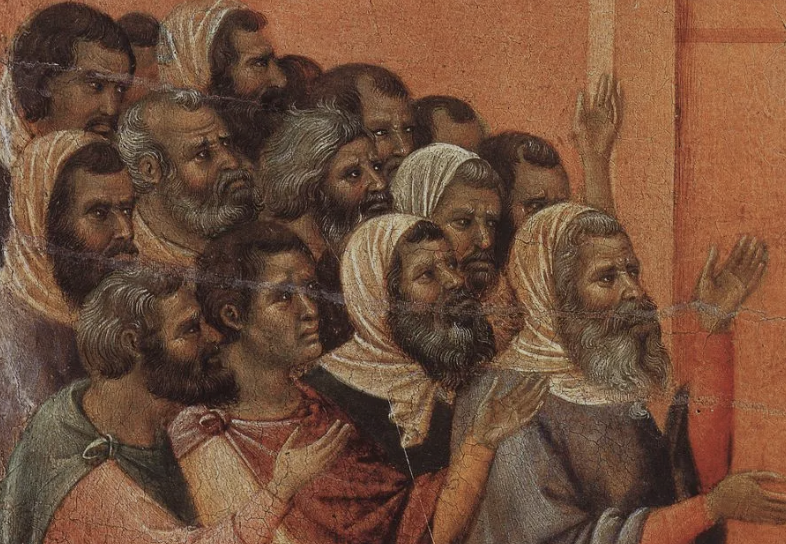
1 Then Pharisees and scribes came to Jesus from Jerusalem and said,
THEN – indefinite...
PHARISEEES and SCRIBES. – religion was external...ceremonial, ...all outside not inside.
FROM JERUSALEM – not from the immediate vicinity – 60+ miles away. – they were an official delegation sent to investigate. – Jerusalem = headquarters. ....
SAID – they were on a mission to discredit Jesus – they were conspiring against him to kill him.
2 “Why do your disciples break the tradition of the elders? For they do not wash their hands when they eat.”
BREAK - παραβαίνωa; παράβασις, εως f; παρανομέω; παρέρχομαιc: to act contrary to established custom or law, with the implication of intent—‘to disobey, to break the law, to transgress, disobedience, transgression1

The Pharisees considered the fact that the disciples did not “wash their hands” as sinful.
TRADITION - παράδοσις, εως f: (derivative of παραδίδωμιc ‘to instruct,’ 33.237) the content of traditional instruction—‘teaching, tradition2
TRADITION OF THE ELDERS – in existence from time of Babylonian Captivity...commited to writing in the Mishna near the end of the 2nd Century. – The tradition of the elders was a body of material from rabbinic teachers interpreting or applying the law, later codified in the Mishnah and Talmud. According to the famous rabbi Akiba (a contemporary of Matthew), this tradition served as a fence around the law, to prevent persons from transgressing the law itself (Aboth 3:14).3
This was a reference to the large body of oral traditions
called the Mishnah which interpreted the Law of Moses and helped apply it to everyday life. The Mishnah was codified most completely by Rabbi Judah in A.D. 200 and later became part of the Talmud. It was believed by the rabbis to be as authoritative as the Torah (Gen.–Deut.), for it, too, was believed to have been given orally to Moses by God (cf. Deut. 4:14).4o Halakhah – the oral tradition
o Mishna – writings of the Scribes and rabbis – 200 AD (Mishna = from Hebrew verb to repeat) - The Mishnah—This was an oral interpretation of the Law of God. Over time, this oral tradition was expanded to some 4,000 plus rules and regulations that covered every aspect of Jewish life. Included in this oral tradition were elaborate rules regarding external cleanliness, especially cleanliness related to the hands. Some of the Jews actually believed that demons sat in your hands during the night. To fail to wash and then eat with your hands was to take into your body this demonic force.5
o Gemara - Commentaries on Mishna -
o Talmud = (Gemar and the Mishna together) codification of Jewish Law....says God gave oral law tdoMoses....(apply, train, and protect the Law)
§ Says ...” the words of the scribes are more lovely than the words of the law”
§ Says ...”It is a greater time to transgress the words of the school of Rabbi Hillel than the words ofScripture”
§ Says...” My son ...attend to the words of the scribes more than the words of the law.” §o Midrash – commentaries on books of the Bible.
o Traditions are not bad in and of themselves – but they should never overrule God’s Word. (Sola Scriptura)
o Roman Catholic Church – Mid-1500s – 4th session of Council of Trent - ... Declared that the special revelation ofGod’s truth is found in Scripture And in the tradition of the church.
WASH – literally = rinse
EAT – in Greek = “eat bread”
The issue is not ....being uncouth....but violating religious traditionBulleted lists use arrows instead.
If you touched Gentile – you were defiled...needed to detoxify.
Demon – Shibtah...dwelt on people’s hands when they slept. If did not rinse ceremonially....he would pass into their bodies...
Rabbi taught...all you have to do to protect from this is “rinse”
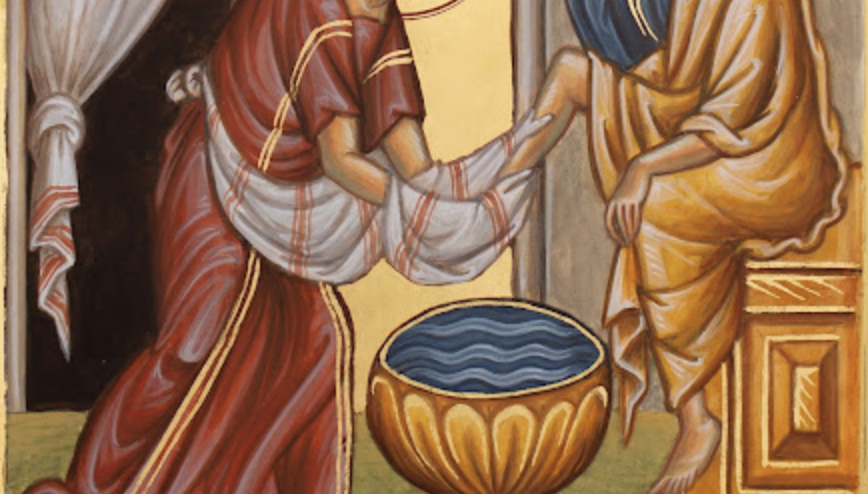
Minimum water = quarter of a log = 1 1⁄2 egg shells... first poured on both hands, held with fingers pointed upward....must run down the arm as far as wrist...and drop off ..for water = unclean. ...could not run down fingers again...or unclean again. ...would repeat the process with fingers pointing down. Then finalized with rubbing with the fist of the other.....This was to be done before every meal and between every course in every meal.
Any meaningless ceremonies????
these leaders come “from Jerusalem.” They would presumably present a greater zeal, authority, and implicit threat. Their question refers specifically to the oral laws (“the tradition of the elders,”—i.e., of their forefathers) which had been developed to help explain and apply the Scriptures. The handwashing was more ceremonial than hygienic, though obviously both elements were involved. The entire Mishnaic tractate Yadim (“Hands”) would later outline various required ritual cleansings. It was inconceivable that the disciples would break these laws if Jesus had not already disregarded them (as confirmed by Luke 11:38), but the Pharisees and scribes still frame their question somewhat respectfully by questioning only his followers’ behavior.6
Washing before meals was alone regarded as a commandment; washing after meals only as a duty. By and by the more rigorous actually washed between the courses, although this was declared to be purely voluntary. The distinctive designation for washing after meals was the lifting of the hands; while for washing before meat a term was used which meant, literally, to rub. If “holy,” i.e., sacrificial food
Was to be partaken of, a complete immersion of the hands, and not a mere “uplifting” was prescribed. As the purifications were so frequent, and care had to be taken that the water had not been used for other purposes, or something fallen into it that might discolor or defile it, large vessels or jars were generally kept for the purpose (see John 2:6). It was the practice to draw water out of these with a kind of ladle or bucket—very often of glass—which must hold at least one and a half egg-shells (compare draw out now, John 2:8). The water was poured on both hands, which must be free of anything covering them, such as gravel, mortar, etc. The hands were lifted up so as to make the water run to the wrist, in order to insure that the whole hand was washed, and that the water polluted by the hand did not again run down the fingers. Similarly, each hand was rubbed with the other (the fist), provided the hand that rubbed had been affused; otherwise, the rubbing might be done against the head, or even against a wall. But there was one point on which special stress was laid. In the “first affusion,” which was all that originally was required when the hands were not levitically “defiled,” the water had to run down to the wrist. If the water remained short of the wrist, the hands were not clean. See on Mark 7:3 (Edersheim, “Life and Times of Jesus”).7
The disciples’ negligence makes them ritually unclean according to the tradition of the Pharisees. However, this point is not elucidated in the law, which required only priests to wash prior to service. The Pharisees applied this ceremonial purity to all Jews (compare Exod 30:17–21; Lev 15:11; Mark 7:3–4).8
The Mishnah devotes an entire tractate of Jewish law to a discussion on how the hands should be washed. Good Jews were expected to perform ritual hand washing before, during, and after each meal. A person would first pour water over his hands with the fingers pointing up and with the water reaching the wrist, then he would point the fingers down and pour the water again, this time allowing the water to drip off the fingers. If one mixed up this order or poured the water both times with the hands pointed down or up, the hands were still ritually unclean. Each hand had to be rubbed with the other, but this could not be done until the other hand was clean. To neglect the first or third washing was considered a serious sin, possibly a deadly one. Such washing was not prescribed by OT law but was a tradition passed down to first-century Jews by their elders. Many teachers gave these human traditions an authority equal to that of OT commandments.9
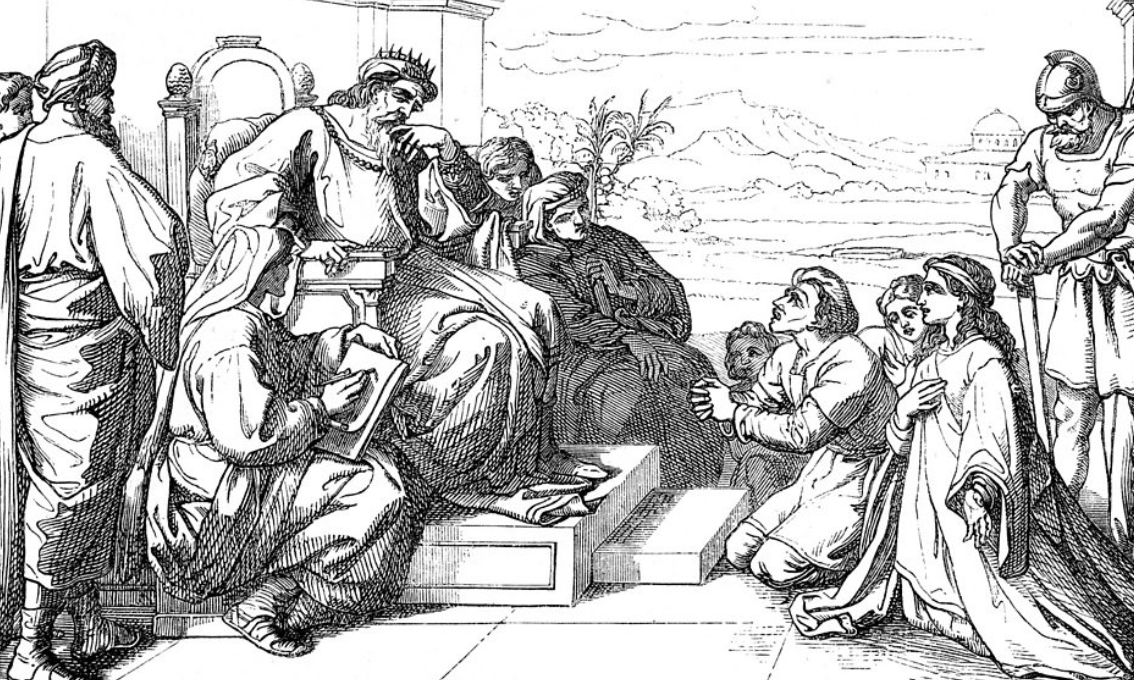
3 (Jesus) answered them, “And why do you break the commandment of God for the sake of your tradition?
NOTICE THAT Jesus does not deny...
COMMANDMENT - ἐντολή, ῆς f; ἔνταλμα, τος n: (derivatives of ἐντέλλομαι ‘to command,’ 33.329) that which is authoritatively commanded—‘commandment, order.’10
The commentator Lightfoot gives a number of curious illustrations from the old Talmudic writers, showing the value that
they set on traditions: “The words of the scribes are lovely, above the words of the law; for the words of the law are weighty and light, but the words of the scribes are all weighty. The words of the elders are weightier than the words of the prophets.”11
Handwashing was not for hygienic purposes but for ceremonial cleanliness. The OT did not require washing before every meal, but tradition grew from Ex. 30:19 where the priests were to wash, and Lev. 15, where those who touched something unclean were to wash. By Jesus’ time washing before meals had become a major part of Jewish religious life. One early rabbi was excommunicated for not washing properly! Not only was washing before meals commanded, but washing after and even between the individual courses was also considered a religious ceremonial duty.12
4 For God commanded, ‘Honor your father and your mother,’ and, ‘Whoever reviles father or mother must surely die.’
HONOR - τιμάωc: to provide aid or financial assistance, with the implication that this is an appropriate means of showing respect—‘to give assistance to, to provide for the needs of as a sign of respect, to support and honor.’ χήρας τίμα τὰς ὄντως χήρας ‘support and honor those widows who really are left alone’ 1
Tm 5:3.13
HONOR YOUR FATHER AND YOUR MOTHER – 5th of 10 Commandments (Ex 20:12a) – imposed a divine obligation on families to care for their elderly parents.
REVILE - κακολογέω: to insult in a particularly strong and unjustified manner—‘to revile, to denounce.’ ὁ κακολογῶν πατέρα ἢ μητέρα θανάτῳ τελευτάτω ‘he who reviles his father or mother must die’ Mt 15:4.14
WHOEVER REVILES FATHER OR MOTHER – Ex 21:17; Lev 20:9
1 Tim 5:8
Matthew 10:37
does not contradict these principles because care for our parents forms part of God’s will. We may see that others’ needs are provided for without maintaining so much loyalty to them that God’s priorities are neglected.15
5 But you say, ‘If anyone tells his father or his mother, “What you would have gained from me is given to God,”
GAINED - ὠφελέωa: to provide assistance, with emphasis upon the resulting benefit—‘to help.’ ἡ σὰρξ οὐκ ὠφελεῖ οὐδέν ‘human nature is of no help’ Jn 6:63.16
GIVEN TO GOD – literally from the Greek = “a gift/dedicated to God” - “they would pledge their estates to the Temple”
Qorban – offering - devoting certain monies or properties to the temple upon their death so that no one but themselves could benefit from them while they were still living.
The Corban practice in view was that of pledging money or other material resources to the temple to be paid upon one’s death. These funds could therefore not be transferred to anyone else but could still be used for one’s own benefit while one was still alive (v. 5). The situation turns ironic in that the Pharisees’ laws prevented compassionate help for others in need, including those, like parents, to whom one was most obliged.17
If a person merely pronounced the word “Corban” over any possession or property, it was irrevocably dedicated to the temple.18
Doron — gift
“I’ve already given to God what you might have benefited from me”
Qorbon even applied if you owed money to a debtor....it was protected....
In Mark (Mk 7:11), it is, “Corban!” that is, “An oblation!” meaning, any unbloody offering or gift dedicated to sacred uses.19
given to God. The picture is that of a churlish son evading the duty of assisting his needy parents by uttering the formula,
Corban, it is a gift to God. “Whatever that may be by which you might be helped by me, is not mine to give. It is vowed to God.” The man, however, was not bound in that case to give his gift to the temple-treasury, while he was bound not to help his parent; because the phrase did not necessarily dedicate the gift to the temple. By a quibble it was regarded as something like Corban, as if it were laid on the altar and put entirely out of reach. It was expressly stated that such a vow was binding, even if what was vowed involved a breach of the law.20
To illustrate his point, Jesus cites the practice of dedicating property to the temple with a binding oath (cf. Num. 30:2), thereby preempting any claims others might make on it. (One did not thereby give up use of the property, but simply changed its legal status from secular to sacred.) According to the text, this stratagem could even be used to deny support to aging parents.21
6 he need not honor his father.’ So for the sake of your tradition you have made void the word of God.
NEED NOT –
MADE VOID - ἀκυρόω; περιφρονέω: to refuse to recognize the force or power of something—‘to invalidate the authority
of, to reject, to disregard.’22
Jesus nevertheless claims that their laws require persons to violate Mosaic commandments. Verse 6b echoes the question of v. 3 in the form of a rebuke. Laws designed to build a fence around the Torah are actually undermining it. “Nullify” means to invalidate the authority of. The Greek verb (akyroō) originally meant to break a covenant.23
The intent of the Pharisees is to release the person who is giving his possessions to God (at a later date) from the family obligation of caring for his parents.
Col 2:8
Jesus’ conflict with man-made tradition was often at the forefront of his ministry. Unfortunately, he might well regard many
of our modern “authorities” the same way. What Jesus confronted here was not so different from the unwritten traditions of every denomination. We tend to put great stock in our traditions. Unfortunately, many of them are far removed from the teachings of Scripture.24
Part of an adult child’s obligation in honoring his parents was to care for them financially when they were in need, particularly as they grew older and were no longer able to make an adequate living. Widowed mothers or grandmothers were especially desperate for help. There was little opportunity for them to earn money, and they were unlikely to find a new husband to support them (1 Tim. 5:8). The Pharisees’ loophole (“sorry, it is all ‘devoted’ to God”) kept the younger generation from having to take care of their parents in their old age, and thus contradicted the Word of God.25
The Pharisees taught that people could dedicate resources (like food or money) to God rather than giving them to their father or mother; in that way, they would not have to part with their possessions (compare Mishnah Nedarim 3.2; 5.6). Rather than teaching mercy and generosity (the true heart of the law), the Pharisees promoted hard-heartedness and greed (the essence of the elders’ traditions, according to Jesus). In this specific instance, Jesus says they broke the fifth commandment.26
7 You hypocrites! Well did Isaiah prophesy of you, when he said:
YOU HYPOCRITES – Jesus declared that they were guilty of SIN – they were hypocrites. – frauds...fakes...
A hypocrite is a person who puts on an outward display that is not representative of what is truly inside.27
Isa. 1:10–17; Amos 5:21–24; Mic. 6:6–8).
The inconsistencies of those who enforce the “tradition of the elders” make them “hypocrites” (on which see comments under 6:2). The situation Isaiah spoke of regarding his contemporaries is thus being reenacted (Isa 29:13). The temple worship and its ritual are scrupulously supported but at the expense of a genuine relationship with the living God that recognizes the priorities of human need and does not erect institutions and rules that inhibit social and interpersonal responsibility. Jesus’ logic here parallels his use of Hos 6:6 in Matt 9:13 and 12:7, in which sacrifice has replaced mercy.28
8 “ ‘This people honors me with their lips, but their heart is far from me;
9 in vain do they worship me, teaching as doctrines the commandments of men.’ ”
Isaiah 29:13 – they gave lip service but did not really love God. - Isaiah 29 is the second of four “woe oracles” (Isa. 28–31). In Isaiah 29:1–8, Yahweh describes the punishment he will bring down on Jerusalem. Beginning in Isaiah 29:9, he begins to transition into the reasons why he is judging Jerusalem. It must have been fearsome for these Pharisees to hear the words of condemnation by their great prophet Isaiah leveled at them: “Blind yourselves and be sightless ... [your] worship of me is made up only of rules taught by men” (Isa. 29:9, 13). The language Jesus used heightened the contrast between true, worshipful obedience and false, outward hypocrisy.29
LIPS - χεῖλοςa, ους n: (a figurative extension of meaning of χεῖλος ‘lip,’ not occurring in the NT, except as a metonymy for speech30
HEART - καρδίαa, ας f: (a figurative extension of meaning of καρδία ‘heart,’ not occurring in the NT in its literal sense) the causative source of a person’s psychological life in its various aspects, but with special emphasis upon thoughts—‘heart, inner self, mind.’31
IN VAIN - εἰκῇb; μάτην: pertaining to being without any result—‘in vain, to no avail, with no result.’32
Isaiah 1:13-16
Isaiah 66
Prov 21:2
WORSHIP - σέβομαι; σεβάζομαι; εὐσεβέωa: to express in attitude and ritual one’s allegiance to and regard for deity—‘to worship, to venerate33
Jesus said...your worship is worthless. Pointless, empty.
10 And (Jesus) called the people to him and said to them, “Hear and understand:
11 it is not what goes into the mouth that defiles a person, but what comes out of the mouth; this defiles a person.”
DEFILE - κοινόωa; βεβηλόω: to cause something to become unclean, profane, or ritually unacceptable—‘to make unclean, to defile, to profane.’ ... In a number of languages it is quite impossible to translate literally the concept of ‘unclean,’ for physical cleanliness and ritual acceptability are completely unrelated. In some languages it is necessary to translate κοινόωa or βεβηλόω as ‘to take away its holiness’ or ‘to make something unacceptable to God.’ In many cultures one must express this concept as involving so-called negative taboo.34
In the Gospels, every instance of koinoō refers to moral impurity. Whereas the Pharisees would have understood the term to refer to ritual impurity, Jesus turns it on its head and insists that moral behavior is what makes one impure. Every instance in Acts reflects concerns of ritual purity with regard to either the food laws (Acts 10:15; 11:9) or the temple (Acts 21:28). The use in Hebrews 9:13 reflects both ritual (water) and moral (blood) purity.35
The sense “profane” occurs in Rev. 21:27; Heb. 10:29 (“profaning the blood of the covenant”); Mk. 7:2 (“cultically unclean hands”). The NT denies that anything that God created is ritually profane (cf. Acts 10:28; Rom. 14:14). Weaker brethren may still think in these terms, and allowance must be made for them, but they are objectively mistaken (Rom. 14:14).36
DEFILE = POLLUTE – make impure, make unclean, make dirty, make foul.
Psalm 119:1 Blessed are the undefiled.
James 1:27 – pure religion that is undefiled..
1 Cor 8:7 – avoid a weak and defiled conscience
Hebrews 12:15 – do not be defiled by a root of bitterness springing up in you.
1 Cor. 3:16 – 17 – Know ye not. That you are the temple of God and that the Spirit of God dwells in you? If any man defile the temple of God, him will God destroy. For the temple of God is holy, which temple you are.
Rev 3:4
Rev 21 in heaven, nothing that defiles
God calls for holiness....for his people to be clean, pure, spotless....
OT = pictures....
DEFILEMENT is a Spiritual issue...not a physical one.
1 Sam 1:16 - man looks on outward appearance but God looks on the heart.
is from a word meaning “to make common,” as opposed to ceremonially holy and pure. Jesus was not denying that people can become unacceptable before God. He differed with the religious leaders on how a person becomes defiled before God. They said God evaluated what goes into a person from outside, but Jesus said God evaluated what comes out of a person from inside.37
12 Then the disciples came and said to (Jesus), “Do you know that the Pharisees were offended when they heard this saying?”
OFFENDED - σκανδαλίζωc: to cause someone to experience anger
and/or shock because of what has been said or done—‘to cause one
to be offended, to offend38
Matthew 13:57 – They took offense at him.
The Pharisees’ reaction doesn’t surprise Jesus because he knows
they are not all truly God’s people. Instead, he warns of their coming judgment; but as in the parable of the wheat and weeds, the disciples can leave that to God (v. 14a). The Pharisees will even undermine each other with their teaching, like blind people leading other blind people into “a pit,” a kind of ditch or trench likely to cause injury and prove difficult to get out of (cf. 12:11). The imagery is particularly ironic in light of Rom 2:19.39
13 (Jesus) answered, “Every plant that my heavenly Father has not planted will be rooted up.
Reminiscent of Matthew 13:30
EVERY PLANT - Every plant Drawing from Isaiah, Jesus uses plant imagery to describe the people of God (see Isa 60:21).40
ROOTED UP - ἐκριζόω: to remove a plant, including its roots—‘to uproot, to pull out by the roots.’ 41
14 Let them alone; they are blind guides. And if the blind lead the blind, both will fall into a pit.”
PIT – points to HELL
Jewish leaders instructed in the law viewed themselves as “a guide to the blind, a light to those who are in darkness” (Rom. 2:19; cf. Isa. 42:6–7). Jesus labels them as a case of the blind leading the blind (cf. 23:16–26). The guidance they offer is not dependable but leads to destruction.42
15 But Peter said to (Jesus), “Explain the parable to us.”
16 And (Jesus) said, “Are you also still without understanding?”
17 Do you not see that whatever goes into the mouth passes into the stomach and is expelled?
18 But what comes out of the mouth proceeds from the heart, and this defiles a person.
James 1:15
Jesus then revealed that it is not the mouth of a person that is the source of defilement, but the heart. The heart represents the invisible, “inner person.” The inner person includes the mind and will—those components that determine moral character. The heart (not any external influence) is the source of all evil character, not the physical or spiritual “dirt” on a person’s hands. The “renewing of your mind” (Rom. 12:2) is critical for every believer. Christ detailed here the principle that a person is as he thinks in his heart. Entry into the heart is through the eye and the ear, not the mouth.43
19 For out of the heart come evil thoughts, murder, adultery, sexual immorality, theft, false witness, slander.
20 These are what defile a person. But to eat with unwashed hands does not defile anyone.”
Jesus is obviously not talking about ingesting that which does bodily damage, such as the abuse of alcohol or drugs. Morally impure behavior and speech, however, always harms oneself and others and remains an offense to God (v. 18). Jesus’ illustrations combine in sequence the Sixth through the Ninth Commandments of the Decalogue (Exod 20:13–16). These are introduced by general sins of the thought life and supplemented by the sins of sexual immorality (porneia), naturally associated with adultery, and of blasphemies (a better rendering of Greek blasphemiai than “slander”), naturally linked with false testimony (v. 19). Verse 20b brings the discussion back full circle to the original charge of v. 2 and makes it plain that God’s people no longer need to observe ritual hand washing.44
The most extended discussion of the issue occurs in Romans 14. There
Paul, like Mark, affirms that in principle no foods are unclean for the
Christian community. At the same time, Paul recognizes that old traditions of clean and unclean make certain foods problematic for some members. Where this is so, Paul argues, we should forego a menu that causes offense and so maintain a common table for all believers.45Jews believed that ritual purity protected them from incurring God’s wrath; they would not approach God if they were unclean. Jesus teaches that matters of the heart—not external ceremonial regulations—render people unfit to enter God’s presence.46
We must constantly remind ourselves that true religion comes from the heart. We believe with the heart (Rom. 10:9–10); love from the heart (Matt. 22:37); sing from the heart (Col. 3:16); obey from the heart (Rom. 6:17); give from the heart (2 Cor. 9:7); and pray from the heart (Ps. 51:10, 17).47
EXAMINE YOUR HEART!!!!
Continue Reading