Jesus is MORE THAN
Matthew 14:13-21 Outline
Jesus was MORE THAN MOVED
Jesus did MORE THAN A MIRACLE
Jesus gave MORE THAN ENOUGH\
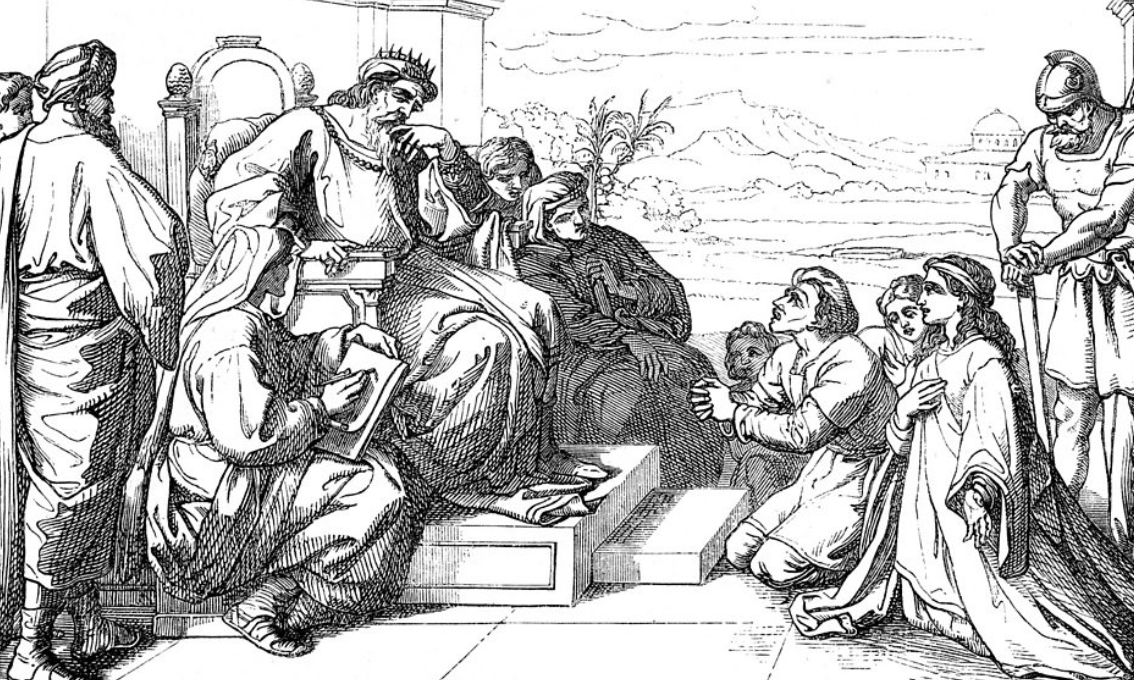
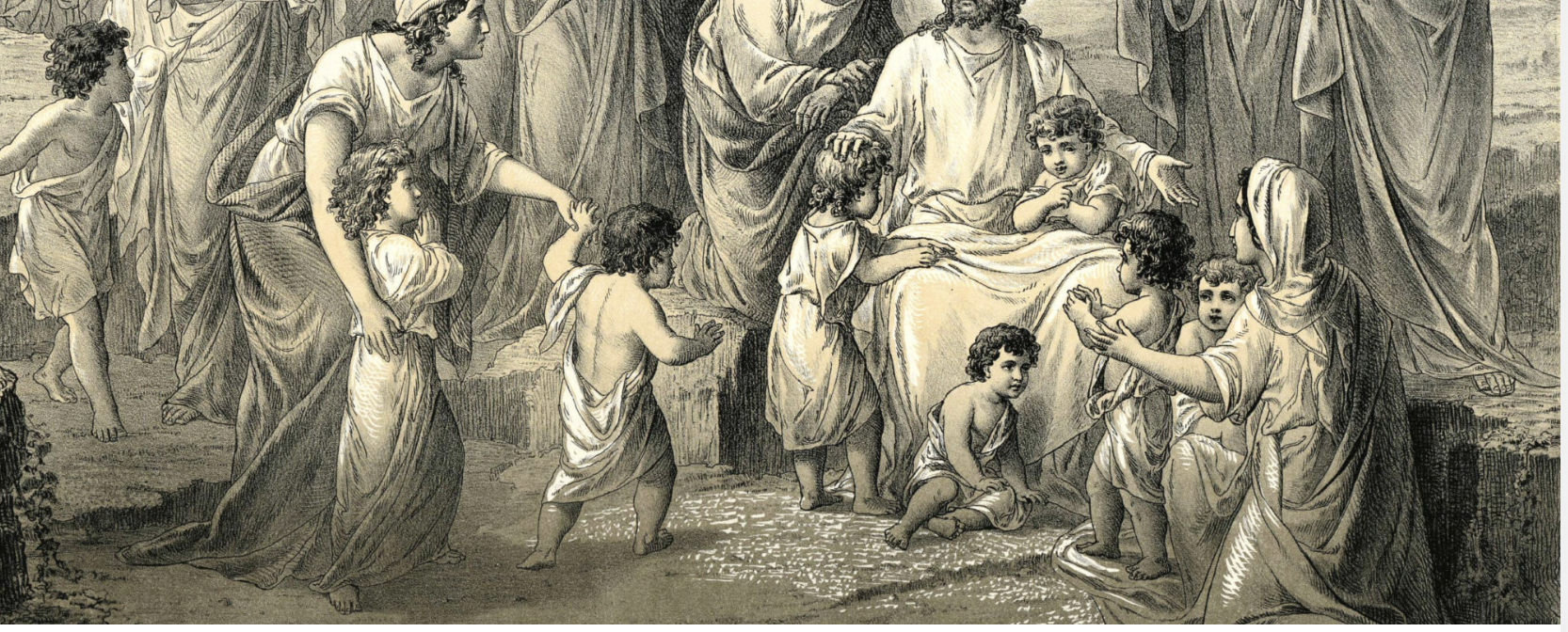
Jesus was MORE THAN MOVED when He saw the great crowd. (v.13-14)
Jesus did MORE THAN A MIRACLE when He fed the great crowd. (v.15-19)
Jesus gave MORE THAN ENOUGH to satisfy the great crowd. (v.20-21)
Commentary Notes on Matthew 14:13-21
High point in Jesus’ ministry – only miracle recorded by all for Gospel writers. His ministry sought the crowds to make his name known, to demonstrate his power, to teach the people re: the kingdom of heaven. He desired the publicity...Religious leaders have rejected him, rising hostility...at this miracle, his popularity has reached a pinnacle....but marks the beginning of his withdrawal. John the Baptist has just been killed. Great superficiality/shallowness. People want to push him into a political agenda – the people saw the Messiah as a political ruler – they want him to lead a revolution. Last year of his life. He is readying the disciples.
God wants to provide for people through you, through you. When He took the little that He had and broke it, who did He give it to? He gave it to the disciples, didn’t He. They stood between Him and the multitude. ...And we stand between Him and the multitude; and God wants to feed the multitude through us. It’s our availability. It’s our heart of service. We stand between Christ and a needy world. This is a spiritual lesson for every generation. The hungry multitude is always present; and there’s always a little band of disciples who haven’t got it, and can’t get it. But there’s always the compassionate Savior who wants to multiply it through us if we’re available. And so it was a training of the twelve time.
This testimony was in all four Gospels.
feeding the five thousand—providing bread for Israel in the wilderness—almost certainly was meant to call to people’s minds God’s supernatural feeding of the Israelites with manna in their wilderness wanderings in Moses’ day. Jewish tradition had come to believe that the Messiah would repeat this miracle of abundant provision of food on an even grander scale.1
Applications of this passage must focus on Christology and spiritual sustenance rather than making vague and sometimes false promises about God meeting all our physical needs. John develops precisely this spiritual import of the miracle by placing Jesus’ “Bread of Life” discourse, given in the Capernaum synagogue, shortly after his account of the feeding miracle (John 6:26–59).2
This is a nature miracle that some men find it hard to believe, but it is recorded by all four Gospels and the only one told by all four. It was impossible for the crowds to misunderstand and to be deceived.3
To grasp the power of this story for Matthew and the early church, we need to recognize its many allusions to the OT and Jewish tradition:
First, the gift of bread to crowds in a deserted place (Greek: erēmos topos, vv. 13, 15) recalls the gift of manna to crowds in the wilderness (erēmos) in Exodus 16.
Second, the loaves, leftovers, and basic theme of the narrative remind us of a story in 2 Kings 4:42–44, where Elisha feeds a hundred men with twenty loaves.
Third, the twelve baskets of leftover food, like the twelve disciples themselves, probably symbolize the twelve tribes of Israel, suggesting provisions for all of Israel.
Finally, when Jesus praises God in a prayer of blessing and then breaks and distributes the bread (v. 19), he is acting as the head of a Jewish family would in presiding over a meal (cf. Acts 27:33–36).
Taken together, these allusions inform the reader that Jesus is a gracious host who supplies the needs of God’s people as Yahweh (the Lord) did in days of old. He spreads “a table in the wilderness,” giving the people “food in abundance,” so that “they ate and were well filled” (Ps. 78:19–29).4
13 Now when Jesus heard this, he withdrew from there in a boat to a desolate place by himself. But when the crowds heard it, they followed him on foot from the towns.
Desire for privacy. – was not easy to find in Galilee. Densely populated area.
Luke/Mark – wrote that disciples were with him. – Luke 9:10 says he want to Bethesda – Bethsaida – a mile south = grassy
hillside.
HEARD – Matthew 14:1-2 (3-12 = a flashback - that JB was beheaded...and that Herod believed he was JB resurrected) –
Avoided Herod.
Jesus was sad ....wept when Lazarus died, wept when he saw Jerusalem.
Herod the Great – this Herod’s father had murdered male children when Jesus was born.
WITHDREW FROM THERE – Galilee – he left by boat. - Geographically distancing himself from hostility will become an
increasingly recurrent pattern.5
John 6:2 tells us why, very simply. It says that, “They followed Him out of the cities, because they saw His miracles which
He did on those who were diseased. And Jesus went up into a mountain, and there sat with His disciples.”
DESOLOATE PLACE – Wilderness. The “solitary place” of v. 13 is the wilderness or unpopulated area east of Galilee.6
According to Luke 9:10, in Gaulonitis, near the eastern Bethsaida. In the dominions of Philip, Jesus found a safe retreat, where His followers might recover their tone of mind, and prepare for going forth anew.7’
BY HIMSELF – Disciples were with him. - he went privately, emphasizing separation from the crowds, not from his disciples.8
CROWDS – Multitudes – John 6:2 – followed him out of the cities because they saw his miracles, which he did for those who were diseased. 3 the Passover was near, - the majority of them were thrill seekers. Like the shallow soil/the weedy soil – an initial curiosity/excitement. – they are not the true worshippers the Father seeks. – an accumulating mass of humanity.
FROM THE TOWNS - From the towns emphasizes the desolate setting to which they followed Jesus.9
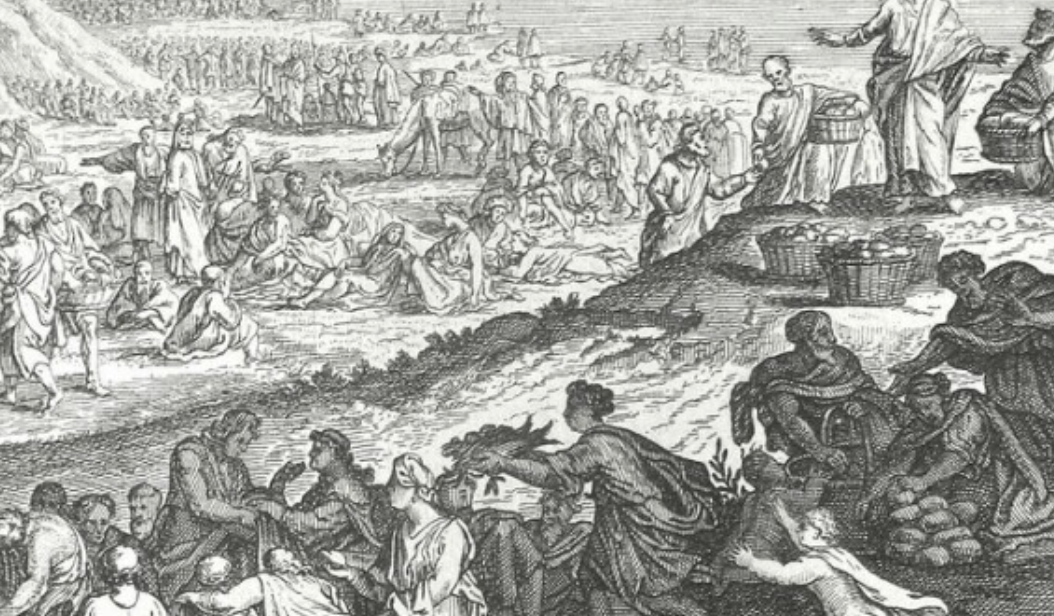
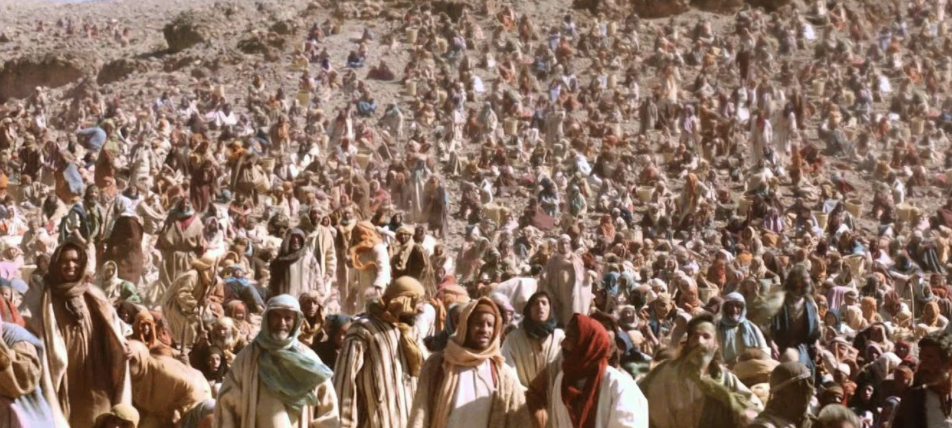
14 When he went ashore he saw a great crowd, and he had compassion on them and healed their sick.
WENT ASHORE – WENT FORTH.
Verse 14 implies that the crowd arrived at Jesus’ destination ahead of him (clearly stated in Mark 6:33–34). It is possible that his journey by boat never took him out of sight of land. Those on land could have watched as they ran, anticipating where he would land.10
Despite heart of the crowds – Jesus has compassion.
HAD COMPASSION – felt deep within his core/pain. Genuine Emotion....like when he wept over Jerusalem....or Lazarus’
grave. – means to suffer with. – he felt their pain/suffering/hurt/sorrow – He was moved. – He was burdened for them when he saw them. –
When Jesus saw me...he had compassion on me and went ashore....to meet me.
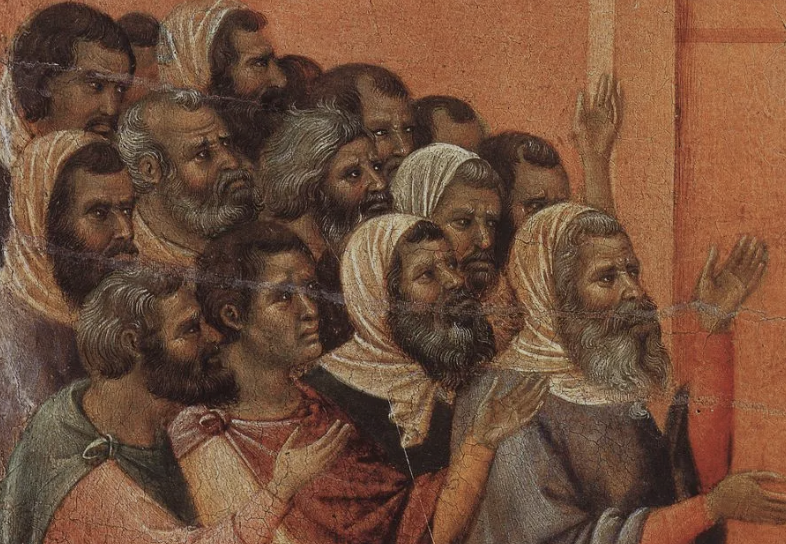
Jesus’ human emotions reflect a deep, gut-level “compassion” (a reasonable, idiomatic English equivalent for a term[from Greek splanchnos] that could refer to bowels and kidneys) for this sea of humanity. His compassion increases because Israel lacks adequate leadership, despite the many who would claim to guide it. The Twelve begin to fill that vacuum, foreshadowing the institution of the church. The language of “sheep without a shepherd” echoes Num 27:17 and Ezek 34:5, in which the shepherd is most likely messianic (cf. Ezek 34:23). Similar sentiments will well up in Jesus again at the feeding of the five thousand (Mark 6:34). As in the days of the prophets, the rightful leadership of Israel had abdicated its responsibility, as demonstrated by its inability or unwillingness to recognize God’s true spokesmen. “Harassed and helpless” literally means torn and thrown down (cf. Berkeley, “mangled and thrown to the ground”). Predators, and possibly even unscrupulous shepherds (Zech 10:2–3; 11:16) have ravaged the sheep. Verse 36 provides a stinging rebuke to the Pharisees, scribes, and Sadducees.11
Their sick (τους ἀρρωστους αὐτων [tous arrōstous autōn]). “Without strength” (ῥωννυμι [rhōnnumi] and α [a] privative). Ἐσπλαγχνισθη [Esplagchnisthē] is a deponent passive. The verb gives the oriental idea of the bowels (σπλαγχνα [splagchna]) as the seat of compassion.12
Psalm 146 – God’s heart goes out to those in need...regardless of how they respond. God demonstrated Divine power....and Divine compassion. – came to heal from sin.
SICK – strengthless ones. – other Gospels say he that he taught them too.
15 Now when it was evening, the disciples came to him and said, “This is a desolate place, and the day is now over; send the crowds away to go into the villages and buy food for themselves.”
(Interlude in John—6:5 asks Philip, “Where shall we find bread?”—Jesus had been healing and teaching about the kingdom. – Philip was from that area...and would have known the resources....6:6 asked Philip to test him.
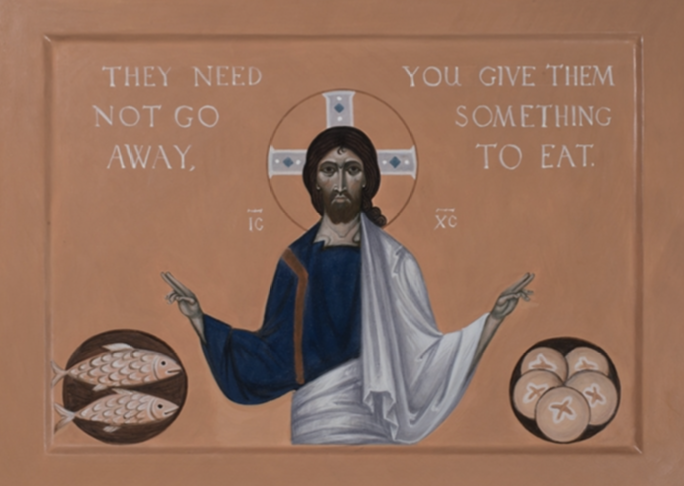
16 But Jesus said, “They need not go away; you give them something to eat.”
YOU FEED THEM..... Jesus replies as if the disciples have a large store of food available (v. 16). “You” is emphatic 13
Jesus may have intended this event to be, above all else, a training opportunity for his disciples. Notice how he challenged their faith by saying, You give them something to eat (14:16), before proceeding with the miracle. He also saw to it that the disciples distributed the bread to the thousands. It must have left an impression. His preparation of his disciples was a task of great importance. On them rested the future of the kingdom.14
Jesus treated their request as ridiculous. “Why should they go away? Provide them with food yourselves,” is the impact of Jesus’ challenge (the “you” is emphatic in You give them). He knew the disciples would not understand, but he issued the challenge to get their attention and to make it obvious how far they had to go in learning faith. This entire miracle is a lesson in the disciples’ training.15
17 They said to him, “We have only five loaves here and two fish.”
WE CAN’T – Should we send them away? – we got nothing....we feel empty. All I have are “five loaves and two fish” – Gideon story – Little is much when God is in it.
What are your Bread/Fish?
Blessed are the Poor in Spirit. Where God guides God provides. I can’t/God can. – Isaiah.
five loaves and two fish A meal that might feed two people. Bread and fish were the staples of a Galilean peasant diet.
18 And he said, “Bring them here to me.”
Matthew got right to the point by abbreviating the story, leaving out details such as the boy who provided the loaves and fish (John 6:9) and the additional objections the disciples put forth in Mark 6:37.
19 Then he ordered the crowds to sit down on the grass, and taking the five loaves and the two fish, he looked up to heaven and said a blessing. Then he broke the loaves and gave them to the disciples, and the disciples gave them to the crowds.
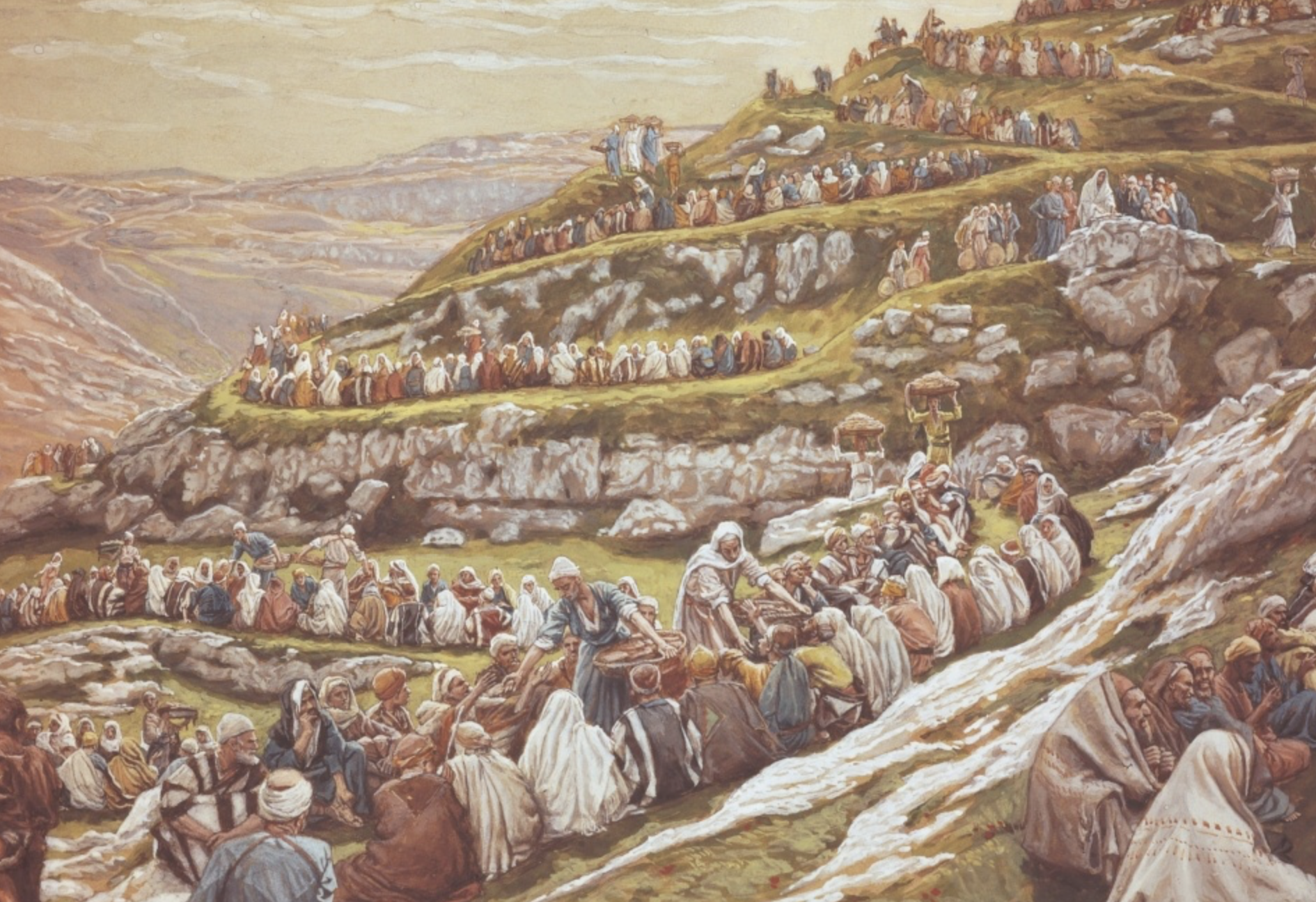
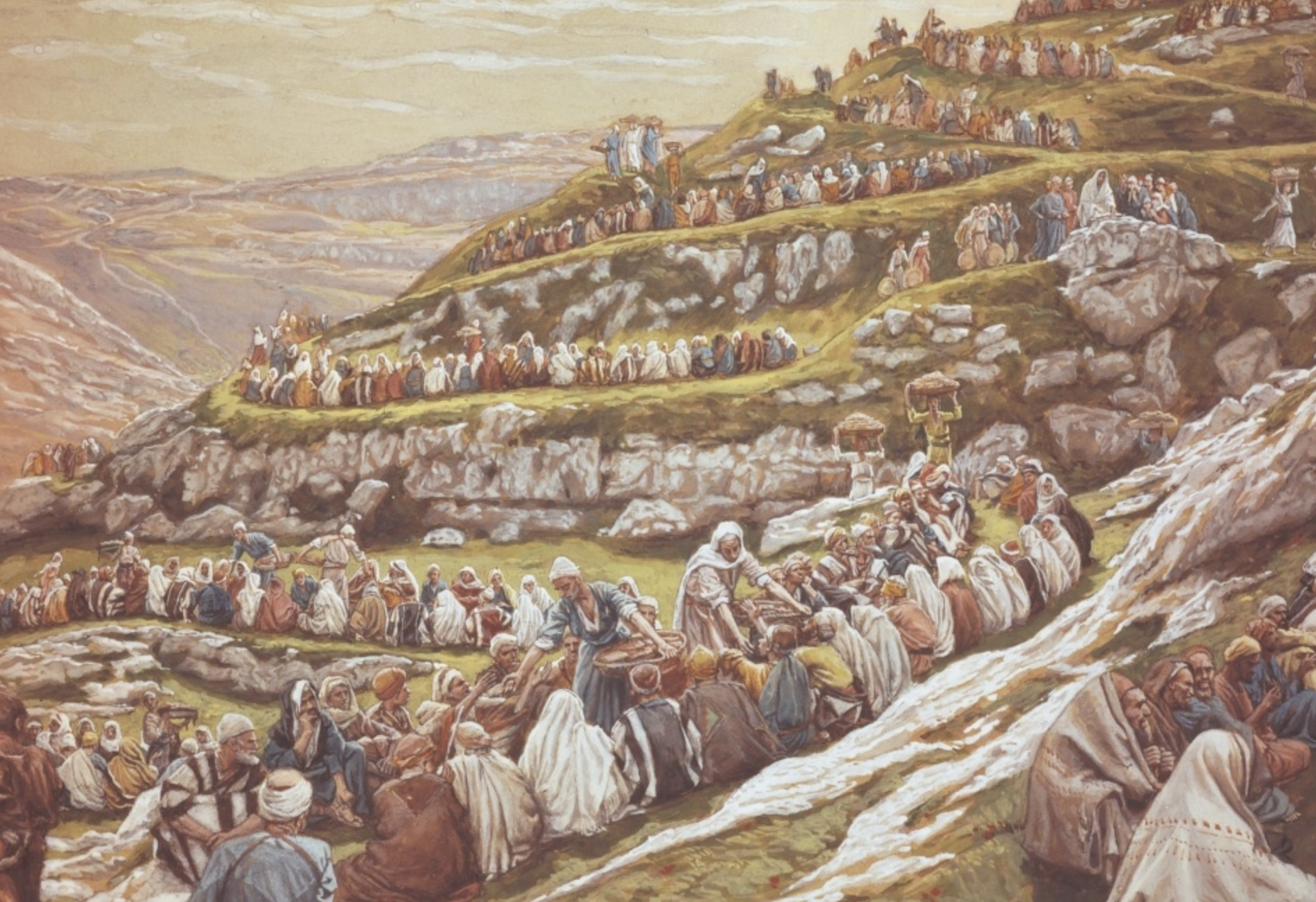
ORDERED THEM TO SIT DOWN ON THE GRASS - Mark adds a graphic touch concerning the manner in which the Saviour commanded the multitude to recline on the pasture ground, viz., in ranks (better, by parties, or in groups, Greek: πρασιαὶ, πρασιαὶ = areolatim, in square garden plots), by hundreds, and by fifties (6:40; comp. Luke 9:14: “by fifties, in a company”).18
Mark 6:40 - 40 So they sat down in groups, by hundreds and by fifties
Mark tells us that they were told by the Lord to seat the people in groups of 50 and 100 with aisles in between, so they could serve them. And, of course, the disciples are obeying the Lord
They used to take those little barley cakes – barley
being the cheapest grain; and the poorer the people, the more likely they would be to use barley, and make little bread cakes like a cracker kind of thing. And then they would take the fish – and they were commonly pickled – and then use like a relish on that little bread.Jesus’ actions reflect the standard practice of a Jewish head of household at the beginning of an ordinary meal... conceivably Jesus could have intended these miracles to foreshadow the Lord’s table.19
LOAVES - loaves.—Baked according to Jewish fashion; bread-cakes, in the shape of a plate.20
LOOKED UP TO HEAVEN AND SAID A BLESSING - A good Jew would thank God for providing each meal, but this prayer was even more significant. It acknowledged the God of heaven as the source of authority and power behind the miracle that was about to happen. However, this act of provision was no more difficult for God than his normal, daily provision of food. We should not minimize the miracle of this passage, but let it raise our awareness of God’s constant provision for our daily needs.
20 And they all ate and were satisfied. And they took up twelve baskets full of the broken pieces left over.
SATISFIED – Chortazō is the word used of an animal who’s into the feed trough for all he can get, or a horse who’s in the feed bucket. It means foddered up. They were all foddered up. They all ate as much as they wanted. And you can know that if it was uncursed barley cakes and uncursed fish, they had a lot. It must have been the best stuff they ever ate. And they were totally satisfied. They had all they wanted.
Matthew 5:6, “Of those that hunger and thirst after righteousness, they shall be” – what? – “filled.”
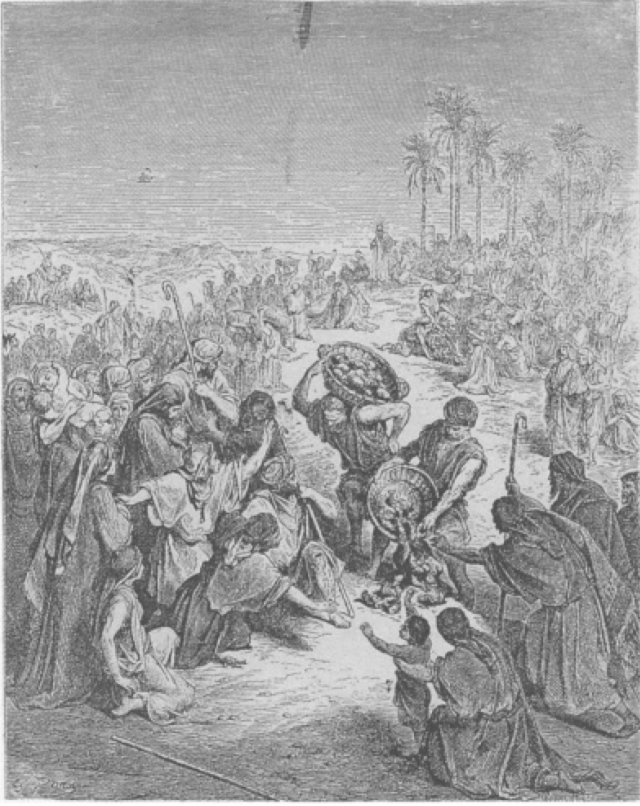
TWELVE BASKETS FULL – God took and multiplied what they had - The word for “basketfuls” (kophinos) describes a distinctively Jewish basket for carrying kosher food
They all ate and were satisfied. And, as is characteristic of our gracious God, he provided more than was needed. The twelve baskets indicate the abundance of provision.23
21 And those who ate were about five thousand men, besides women and children.
THOSE WHO ATE - the Greek participle “they that were the eaters”
Men, women, children – could have been up to 25K. ...10Kplus.
John 6:15 says they tried to make Him king. They tried to take Him by force and make Him a king.
Psalm 132:15 - I will abundantly bless her provisions; I will satisfy her poor with bread.
Choose some stadium or arena and picture what fraction of the seating would be filled by ten thousand people. Then imagine
these people all being satisfied by five loaves of bread and two fish. Then you will begin to comprehend the impact of this miracle—and, by extension, the impact of God’s provision of our every need through Jesus, the Messiah-King. And, by personalizing it, the impact upon those twelve disciples.24
Perhaps on this occasion, there were not so many as usual because of the rush of the crowd around the head of the lake. Matthew adds this item and does not mean that the women and children were not fed, but simply that “the eaters” (οἱ ἐσθιοντες [hoi esthiontes]) included five thousand men (ἀνδρες [andres]) besides the women and children.25
Continue Reading